
In Oscar Wilde’s acclaimed novel The Picture of Dorian Gray, the immoral yet sage Lord Henry advises an impressionable youth, Dorian Gray, in the value of Aestheticism and its superiority to logical genius. Most memorably— “‘Youth! Youth! There is absolutely nothing in the world but youth!'” (Wilde 23)— Lord Henry asserts Youth as the most invaluable quality one might possess. This is mirrored in Wordsworth’s poem as he elaborates on the “far deeper zeal / Of holier love” (Wordsworth lines 155-156) obtained not from knowledge nor any religion, but from Beauty as presented to him by Nature. Wilde’s assertions are further mirrored in Wordsworth’s work through the poet’s laudation of Youth and its joyful intensity.
In “Lines Composed a Few Miles above Tintern Abbey” by William Wordsworth, the author incorporates imagery, personification, and diction to express the vivacity of youth and the enlightenment offered by the genius of Nature’s beauty, and examines how returning to nature later in life may restore the intensity of sensation that pales and diminishes as one matures and grows older.
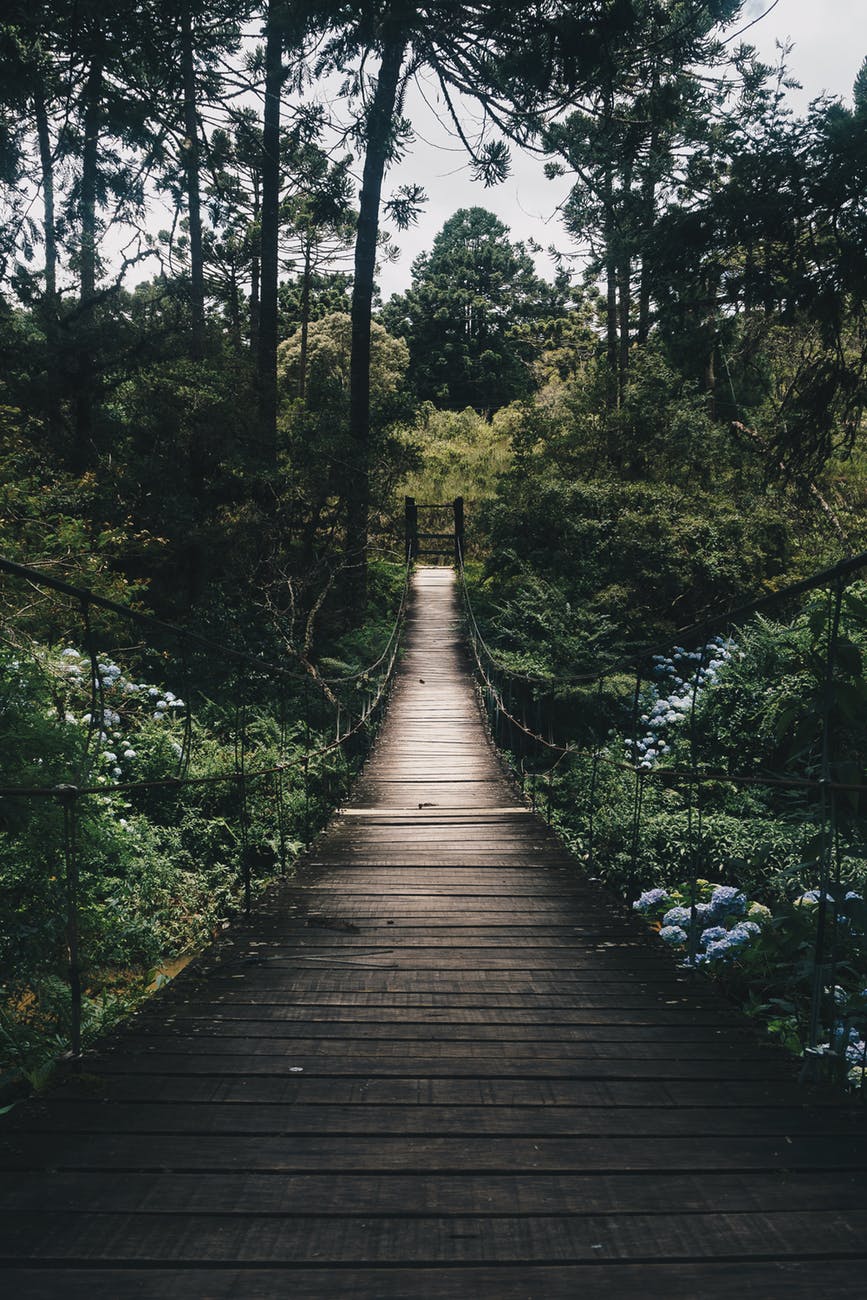
Throughout the piece, Wordsworth’s illustrative use of imagery expresses the intelligence of beauty in nature that surpasses all logical thought and other sources of inspiration. This is particularly emphasized as the author states:
[T]he tall rock,
(Wordsworth lines 78-83)
The mountain, and the deep and gloomy wood,
Their colours and their forms, were then to me
An appetite; a feeling and a love,
That had no need of a remoter charm,
By thought supplied.
By painting a landscape of awe-inspiring scenery, Wordsworth conveys the spirituality and the genius he derives from experiencing nature.
While the author admires nature for its aesthetics, he also finds himself enraptured by its ability to unite his current, aging form devoid of the passion of youth to his “boyish days / And their glad animal movements” (Wordsworth lines 74-75). Referring to his “dear, dear Friend” (Wordsworth line 117), Nature, Wordsworth claims:
[I]n thy voice I catch
(Wordsworth lines 117-120)
The language of my former heart, and read
My former pleasures in the shooting lights
Of thy wild eyes.
The poet thus personifies nature as a benevolent being, and addresses it as such in order to communicate Nature’s potent capability to restore one to their former self, much like the company of an old friend from one’s youth.

As the vivacity of youth and all it encompasses lies central to the selection’s theme, Wordsworth uses energetic diction to describes the immense lust for life he possessed “when first/ [He] came among these hills” (Wordsworth lines 67-68). Wordsworth describes the emotions experienced during his youth as “wild ecstasies” (Wordsworth line 139); this word choice connotates the immense pleasure he was capable of feeling, and continues to gain depth as the poet contrasts the extremes of youth to the monotony of maturity as he describes his enjoyment of nature later in life as “sober pleasure” (Wordsworth line 140). Essentially, the diction displayed in these examples illustrate the experiences at different stages in life as opposite extremes.

Whether you still possess that “pulse of joy” (Wilde 23) of “the gold of your days” (Wilde 23) or whether “thought has seared your forehead with its lines, and passion branded your lips with its hideous fires” (Wilde 22), aging tends to be regarded as inevitable at best and terrifying at worst. Of course, The YaYa Sisterhood has always inspired me to regard old age as fabulous, but even as a teenager, I find myself unsettled by the concept of my own mortality. While Wilde frightened me with Lord Henry’s claims of the misery of aging, I find wisdom and solace in Wordsworth’s contrasting viewpoint:
[F]or such loss [of Youth], I would believe,
(Wordsworth lines 89-96)
Abundant recompense. For I have learned
To look on nature, not as in the hour
Of thoughtless youth; but hearing oftentimes
The still sad music of humanity,
Nor harsh nor grating, though of ample power
To chasten and subdue.—And I have felt
A presence that disturbs me with the joy
Of elevated thoughts.
Wordsworth discusses what he has gained in exchange for his youth. He is more thoughtful, temperate, and increasingly wise; many would agree with Wordsworth, and regard Lord Henry’s damnation of old age as a symptom of denial and immaturity rather than a reflection of the true condition. Perhaps the assertions of Wilde and Wordsworth are more useful as an assessment of the contrast between pessimists and optimists than a comparison of man’s attitude towards youth and aging. Regardless, I agree with both authors on the value of spending time in nature and the raw intellect of nature’s aesthetic beauty, which has been known to keep people young at heart.
Work Cited
Beckson, Karl. “Oscar Wilde.” Encyclopædia Britannica, Encyclopædia Britannica, Inc., 5 Feb. 2019, http://www.britannica.com/biography/Oscar-Wilde.
Britannica, The Editors of Encyclopaedia. “Aestheticism.” Encyclopædia Britannica, Encyclopædia Britannica, Inc., 26 Oct. 2018, http://www.britannica.com/art/Aestheticism.
Burton, Neel. “The Two Types of Psychopath.” Psychology Today, Sussex Publishers, http://www.psychologytoday.com/gb/blog/hide-and-seek/201901/the-two-types-psychopath.
Person. “15 Pieces Of Style Advice From Oscar Wilde.” ShortList, ShortList, 5 May 2014, http://www.shortlist.com/style/15-pieces-of-style-advice-from-oscar-wilde/32919.
Romantic Circles, Romantic Circles, http://www.rc.umd.edu/sites/default/RCOldSite/www/rchs/reader/tabbey.html.
Seymour, Miranda. “Constance: The Tragic and Scandalous Life of Mrs Oscar Wilde by Franny Moyle – Review.” The Guardian, Guardian News and Media, 24 June 2011, http://www.theguardian.com/books/2011/jun/24/constance-mrs-wilde-franny-moyle-review.
Wilde, Oscar. The Picture of Dorian Gray. 1890. Barnes & Noble, Inc., 2015.
Wordsworth, William. “Lines Composed a Few Miles above Tintern Abbey, On Revisiting the Banks of the Wye during a Tour. July 13, 1798 by William Wordsworth.” Poetry Foundation, Poetry Foundation, http://www.poetryfoundation.org/poems/45527/lines-composed-a-few-miles-above-tintern-abbey-on-revisiting-the-banks-of-the-wye-during-a-tour-july-13-1798.
 The Picture of Dorian Gray