

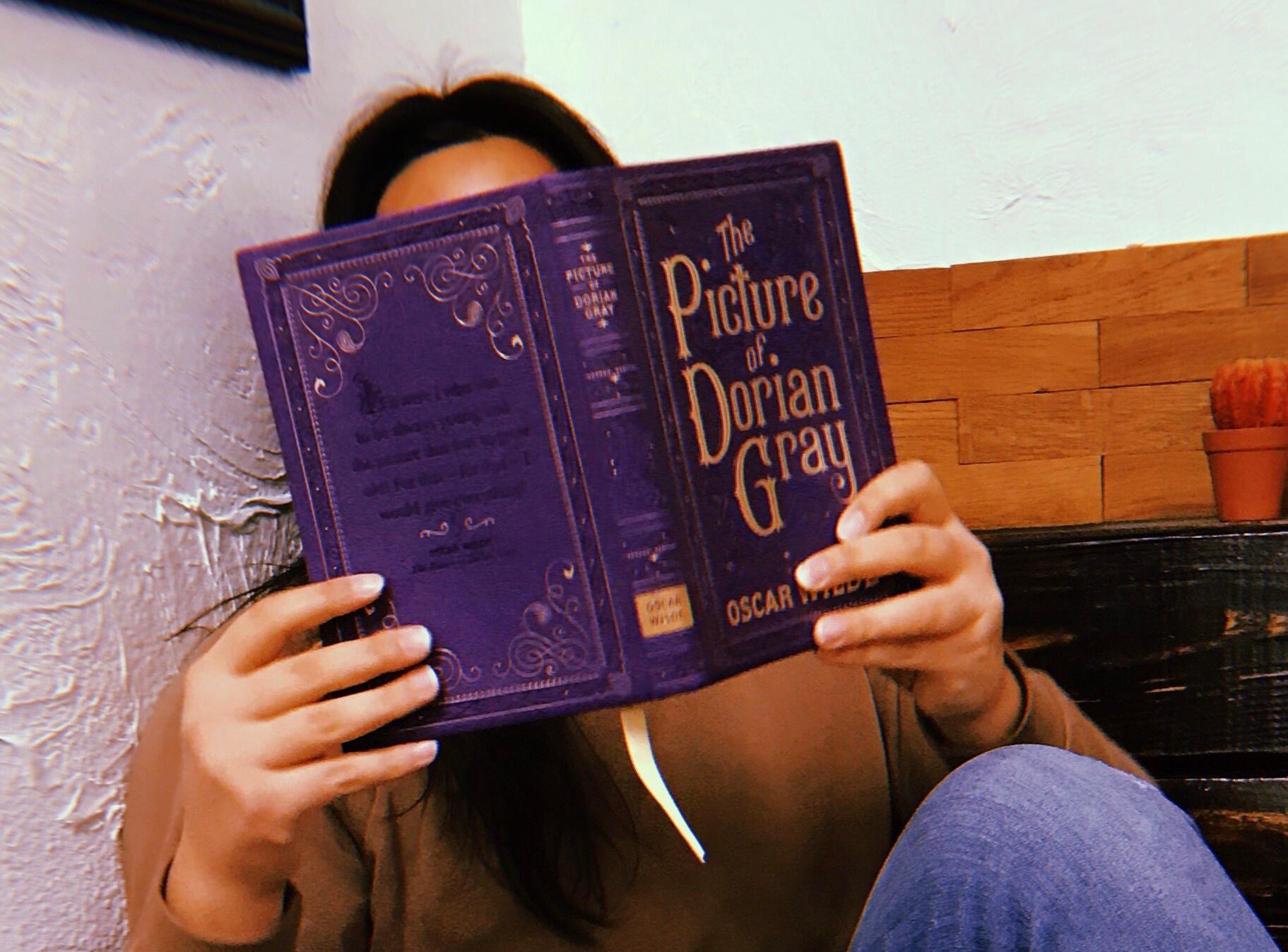
Quite honestly, I did not like The Picture of Dorian Gray or Oscar Wilde at first. I wanted to switch to a novel that seemed easier to write about, less philosophical and morally ambiguous, but as I began to research Wilde and pushed through in reading the novel and analyzing its characters, I understood the true meaning of the work (or what I surmise to be its truth) and found myself fascinated by the life of the author.

My icy opinion towards the writer first started to melt when I began to admire Oscar Wilde’s personal aesthetic (fur coats, baby) and the concepts of Aestheticism he boldly pushed forward at the risk of social isolation. It’s difficult in any age to be one’s authentic self, and Wilde not only faced social ridicule, but served two years of hard labor for his nontraditional lifestyle. Another factor that influenced my opinion of Wilde is the story of his spiritual journey. As a practicing Catholic myself, I found his appreciation for the beauty of the faith and his eventual conversion delightful.
As far as Wilde’s art, the novel itself was both entertaining and stimulating, and I enjoyed the complexity and struggles of its characters. First and foremost, it is a beautiful work. Imagery and diction used throughout and the poetic justice of the protagonist’s end ensure that the depth of the novel’s themes are encircled in elegant roses.
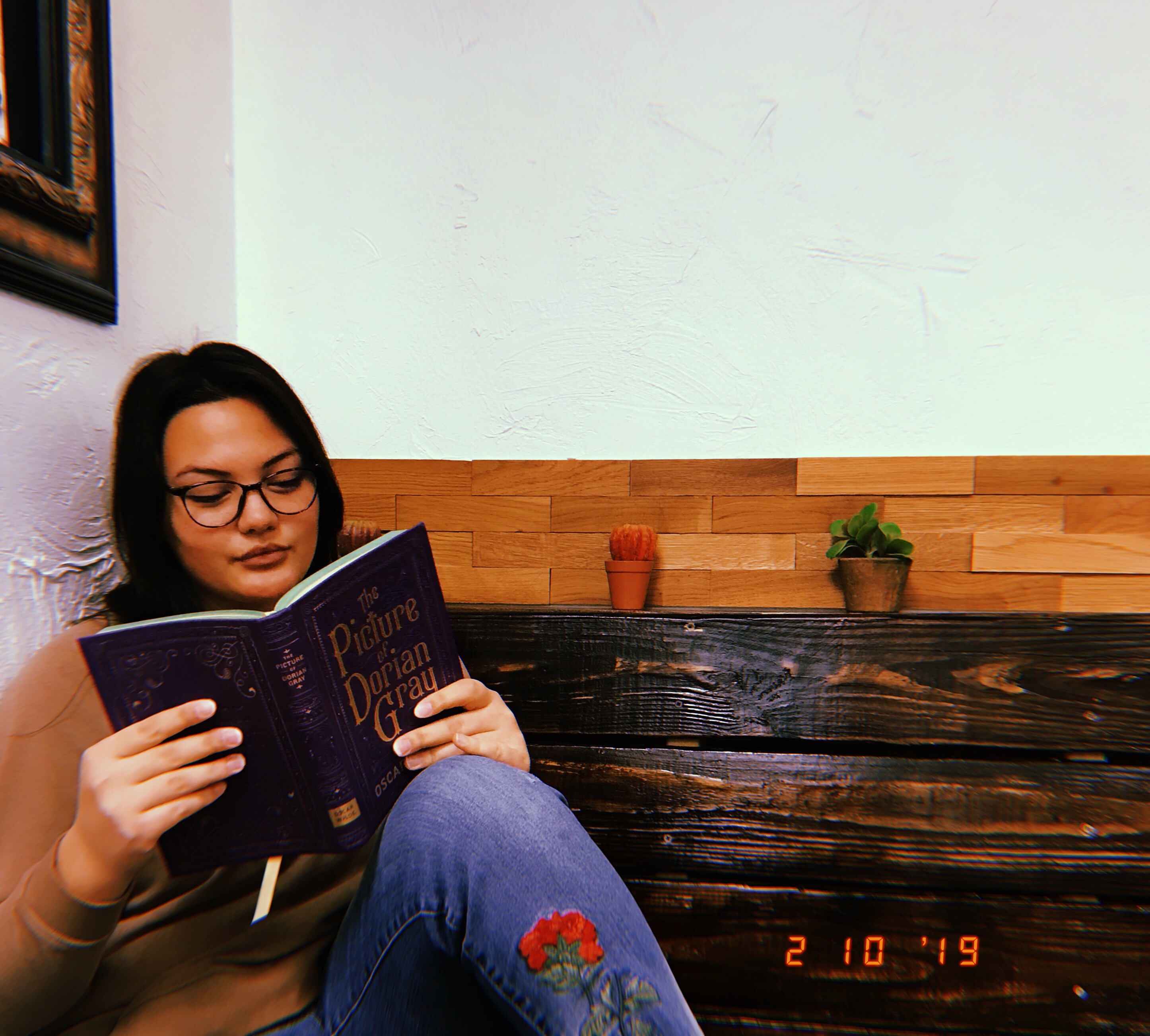
Although at first I questioned whether or not the money I invested in a personal copy of the novel was worth it, fearing I would cast it aside by the end of this (arduous) blog assignment for my senior English class, I am now sure that it will rest on a shelf with my other favorite works of literature until its details become hazy enough to warrant rereading and I can once again drink in the images described by Wilde and digest the complexity of his work.
Work Cited
Beckson, Karl. “Oscar Wilde.” Encyclopædia Britannica, Encyclopædia Britannica, Inc., 5 Feb. 2019, http://www.britannica.com/biography/Oscar-Wilde.
Britannica, The Editors of Encyclopaedia. “Aestheticism.” Encyclopædia Britannica, Encyclopædia Britannica, Inc., 26 Oct. 2018, http://www.britannica.com/art/Aestheticism.
Burton, Neel. “The Two Types of Psychopath.” Psychology Today, Sussex Publishers, http://www.psychologytoday.com/gb/blog/hide-and-seek/201901/the-two-types-psychopath.
Person. “15 Pieces Of Style Advice From Oscar Wilde.” ShortList, ShortList, 5 May 2014, http://www.shortlist.com/style/15-pieces-of-style-advice-from-oscar-wilde/32919.
Romantic Circles, Romantic Circles, http://www.rc.umd.edu/sites/default/RCOldSite/www/rchs/reader/tabbey.html.
Seymour, Miranda. “Constance: The Tragic and Scandalous Life of Mrs Oscar Wilde by Franny Moyle – Review.” The Guardian, Guardian News and Media, 24 June 2011, http://www.theguardian.com/books/2011/jun/24/constance-mrs-wilde-franny-moyle-review.
Wilde, Oscar. The Picture of Dorian Gray. 1890. Barnes & Noble, Inc., 2015.
Wordsworth, William. “Lines Composed a Few Miles above Tintern Abbey, On Revisiting the Banks of the Wye during a Tour. July 13, 1798 by William Wordsworth.” Poetry Foundation, Poetry Foundation, http://www.poetryfoundation.org/poems/45527/lines-composed-a-few-miles-above-tintern-abbey-on-revisiting-the-banks-of-the-wye-during-a-tour-july-13-1798.
 The Picture of Dorian Gray